The Record
London Steamboat Company paddle steamer, returning to North Woolwich from a day excursion to Sheerness. Struck on the starboard bow by the collier Bywell Castle in the Thames at Gallions Reach at 19:40 on 3 September 1878. Sank in under four minutes, 600 to 700 drowned or poisoned. The sewage outfalls at Crossness and Barking had been discharging for an hour before the collision; survivors pulled from the river died of the water in their lungs in the days after.
The Vessel
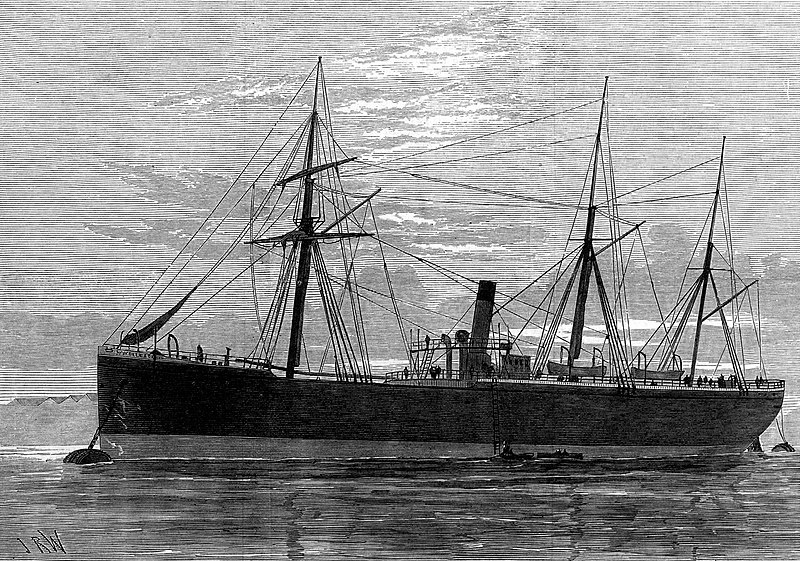
The PS Princess Alice was a British paddle steamer of the London Steamboat Company, commissioned at the Henderson, Coulborn and Company yard at Renfrew, Scotland, on 22 July 1865 as the Bute. She was 66 metres long, 251 gross tons, and had been built for the Clyde estuary pleasure-excursion trade. She had been purchased by the London Steamboat Company in 1867 and renamed Princess Alice for her subsequent service on the Thames estuary pleasure-excursion trade.
The Thames estuary pleasure-excursion trade of the 1860s and 1870s was one of the most popular leisure activities of Victorian working-class and middle-class London. Paddle steamers like the Princess Alice operated regular scheduled excursions from central London piers to the Thames estuary resorts of Gravesend, Southend, Margate, and Ramsgate, carrying substantial numbers of London residents on day trips during the summer and early autumn seasons. Princess Alice alone carried approximately 150,000 passengers per year through the Thames excursion trade.
Her master from 1871 was Captain William Grinstead, 47, a career Thames estuary steamship officer.
The Voyage
On 3 September 1878 PS Princess Alice was returning to central London from a day excursion to Sheerness. Her complement for the return voyage was approximately 750 people: a mix of London families (many with children), individual day-trippers, and approximately 15 ship's crew. The specific passenger count has never been determined with precision because the Thames pleasure-excursion steamers did not maintain formal passenger manifests; the 750 figure is the consensus estimate from the subsequent inquiry.
The weather on the evening of 3 September 1878 was clear; the Thames estuary was calm; visibility was good. Princess Alice was proceeding upriver at approximately 8 knots, on the north side of the Thames estuary, as she approached Gallions Reach in North Woolwich.
Approaching Princess Alice from the opposite direction, proceeding downriver toward the Thames estuary, was the SS Bywell Castle, an 890-ton collier ship of the Newcastle-London coal trade. The Bywell Castle was running downstream at approximately 6 knots, loaded with coal for the continental European coal market.
At approximately 19:40 on 3 September 1878, at Gallions Reach in North Woolwich, the Bywell Castle's bow struck the Princess Alice's starboard side amidships. The collision was immediate and violent: the Bywell Castle's reinforced bow penetrated Princess Alice's paddle-wheel housing and passed approximately 10 metres into the steamer's main deck.
The Disaster
The Princess Alice was split in half by the Bywell Castle collision. Her forward section, containing her passenger saloon and approximately 400 of the passengers, sank within 30 seconds of the impact. Her after section, containing her engine room and approximately 350 passengers, remained afloat for approximately 4 minutes before also sinking.
The specific horror of the Princess Alice disaster, beyond the immediate casualties of the collision itself, was the condition of the Thames estuary water at the collision position. At Gallions Reach in 1878, the Thames estuary was receiving the untreated sewage outfalls of London's Metropolitan Main Drainage system. Two specific sewage outfalls (Crossness and Barking) were discharging directly into the Gallions Reach area on the evening of 3 September 1878; the discharge rate had been estimated at approximately 1.5 million litres of raw sewage per hour.
The passengers of the Princess Alice who had been thrown into the Thames by the collision, or who had entered the water attempting to swim to safety, therefore found themselves in a specific aqueous mixture of partially-treated human waste, industrial effluent, and river water. Many of the 400 passengers of the forward section had died in the initial sinking; of the 350 passengers who entered the water alive, approximately 200 died of drowning or of poisoning from the Thames estuary water in the following 30 minutes.
PS Princess Alice produced approximately 650 dead from 750 aboard in the evening of 3 September 1878, the worst single-day casualty event in Thames estuary maritime history. The disaster was the subject of detailed British press coverage through September and October 1878.
The Legacy
The subsequent British Board of Trade inquiry identified the specific responsibility for the collision. The Board's findings (published February 1879) attributed the collision to the combined failures of both captains: Captain Grinstead of Princess Alice had not maintained adequate lookout at the bow, and Bywell Castle's Captain Harrison had not responded adequately to the meeting regulations of the River Thames. Captain Grinstead had died in the collision; Captain Harrison was formally criticised but not criminally prosecuted. His master's certificate was suspended for six months.
The broader public reaction to the Princess Alice disaster centred specifically on the Thames estuary sewage discharges that had contributed so substantially to the casualty count. The Times of London, the Illustrated London News, and other British periodicals campaigned through 1879-1880 for the specific reform of London's metropolitan sewage arrangement. The campaign contributed directly to the establishment of the Metropolitan Water Board's comprehensive sewage-treatment programme through the 1880s and 1890s; the modern London sewage treatment system is a direct institutional descendant of the post-Princess Alice reforms.
The specific regulatory consequences for Thames estuary passenger-steamer safety were substantial. The London Board of Conservators of the Thames Act of 1882 required all Thames estuary passenger steamers to maintain adequate lifeboat capacity for every person aboard, to display prominent running lights during night operations, and to maintain strict meeting-regulations compliance during estuary operations. The Thames estuary passenger trade was subsequently conducted under substantially stricter regulations than the open-sea passenger trade.
The Princess Alice disaster has been preserved in British cultural memory principally through the specific combination of its casualty count and its sewage-discharge horror. The phrase "as bad as the Princess Alice" appeared in British popular discourse through the 1880s and 1890s as a comparative measure of maritime disasters. The disaster was referenced repeatedly in Victorian literature, most notably in Sir Arthur Conan Doyle's 1890s Sherlock Holmes story "The Adventure of the Greek Interpreter" (in which the Thames estuary location is specifically invoked as a site of past disaster).
The wreck of PS Princess Alice was largely salvaged during the weeks following the disaster, in an effort to recover the bodies of the dead. She was declared a total loss on 1 January 1879 and her remaining structure was broken up. The collision site at Gallions Reach is marked by a memorial stone inscribed with the approximate death count of the disaster. The 650 dead are commemorated at the Princess Alice Memorial at Woolwich Old Cemetery, and at the specific Thames estuary pleasure-steamer memorial at the Greenwich Observatory grounds.