The Record
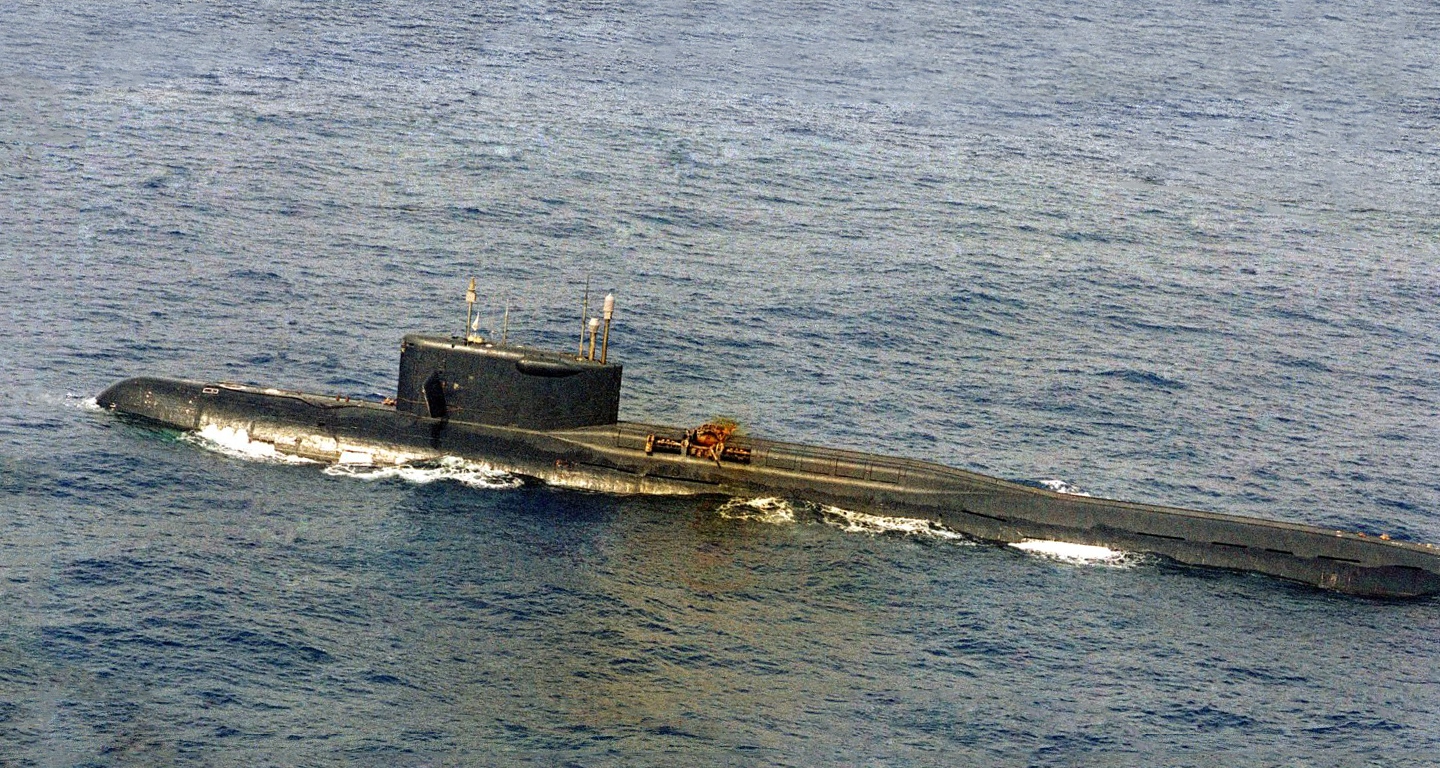
Soviet Yankee I-class ballistic missile submarine, on patrol northeast of Bermuda. Developed a seawater leak into a missile tube on 3 October 1986; the nitric acid oxidizer and hydrazine fuel reacted and exploded, rupturing the silo and starting a fire. The crew scrammed the reactors manually; twenty-year-old Seaman Sergei Preminin entered the compartment to shut the second reactor down and did not come out alive. She was taken in tow and sank four days later, taking two nuclear reactors and sixteen R-27U missiles with her.
The Vessel
The Soviet Navy submarine K-219 was a Yankee I-class ballistic missile submarine of the Northern Fleet, commissioned at the Sevmash yard at Severodvinsk on 31 December 1971. She was 129 metres long, 9,300 tons submerged displacement, and carried sixteen R-27U submarine-launched ballistic missiles in silos behind her sail. Each R-27U missile carried three 500-kiloton nuclear warheads on a multiple independently-targetable re-entry vehicle (MIRV) system; the full missile load represented a strategic nuclear weapons capacity of 48 warheads with a combined yield of 24 megatons.
The Yankee I class was the first Soviet SSBN class capable of sustained under-ice operations and extended Atlantic patrols against American coastal targets. Thirty-four Yankee-class submarines were built at Severodvinsk and Komsomolsk between 1967 and 1974; K-219 was the 27th of the class. Her service from 1971 through 1986 included approximately twelve operational patrols in the Atlantic and the Caribbean, with typical patrol duration of 60-70 days.
Her commanding officer in October 1986 was Captain Second Rank Igor Britanov, 46, a career Soviet Navy submarine officer.
The Voyage
On 4 September 1986 K-219 departed her base at Gadzhiyevo on the Kola Peninsula on her final operational patrol. Her patrol assignment was a standard Soviet North Atlantic SSBN patrol, conducted with her missiles at readiness posture in a deep-diving silent-operations mode. She was to operate for approximately 70 days in the western North Atlantic before returning to Gadzhiyevo.
On 3 October 1986, approximately 30 days into her patrol, K-219 was operating at approximately 540 nautical miles northeast of Bermuda at a depth of 240 metres. A seawater leak had developed in the missile silo hatch of her silo No. 6 several days earlier; the leak had been intermittent and had been managed by her engineering crew without reference to the surface. At approximately 05:30 local time on 3 October 1986, the seawater leak in silo No. 6 made contact with the nitric acid oxidiser component of the R-27U missile's liquid-fuel propellant system. The chemical reaction of seawater and nitric acid produced immediate combustion.
The fire in silo No. 6 spread to the missile's stored hydrazine fuel. At 05:38 on 3 October 1986 the combined reaction produced a pressure-vessel rupture in the missile silo. The rupture vented hydrazine and nitric acid fumes into K-219's interior compartments and initiated a series of cascading fires in the adjacent missile silos.
The Disaster
Captain Britanov surfaced K-219 immediately to conduct emergency damage control. The fires in the missile silos were contained by the submarine's damage-control teams over a period of approximately six hours. Four crewmen died in the initial silo explosion or in the subsequent fire: Warrant Officer Igor Kharchenko, Seaman Nikolai Smaglyuk, and two others whose remains were not formally identified.
The fires in the missile silos, while contained, had produced a more serious secondary problem: heat damage to K-219's two nuclear reactor compartments, which had produced an automatic emergency reactor scram (emergency shutdown). The automatic scram system had then failed to complete the full shutdown sequence; one of the two reactors remained in a semi-uncontrolled state with residual heat buildup that risked a catastrophic reactor core meltdown.
Seaman Sergei Preminin, 20 years old, entered the reactor compartment manually to complete the shutdown procedure that the automatic system had failed to finish. The reactor compartment was filled with superheated steam and had a radiation dose rate at levels that would be fatal within minutes. Preminin closed the reactor's four control rod hatches manually over a period of approximately 20 minutes. He was able to complete the shutdown procedure but was unable to return alive from the reactor compartment; he died of acute radiation syndrome and heat exposure before he could be evacuated.
The disabled K-219, with her missiles silenced and her reactors safely shut down, could no longer submerge or manoeuvre under her own power. She remained on the surface of the Atlantic for three days before being taken in tow by the Soviet merchant vessel Krasnogvardeysk. The tow attempt failed at approximately 11:03 on 6 October 1986; K-219 sank at approximately 5,500 metres depth, 540 nautical miles northeast of Bermuda.
The Legacy
The specific casualty toll of K-219 was relatively low compared to other Cold War submarine disasters: four dead in the initial missile silo event (including Preminin, whose posthumous decoration would make him one of the most-honoured Soviet Navy personnel of the 1980s). However, the broader implications of her loss were substantial. Her 16 R-27U missiles with their 48 nuclear warheads, and her two nuclear reactors, remained on the Atlantic abyssal plain. The total radioactive inventory of the K-219 wreck site included approximately 60 kilograms of plutonium (across the warheads) and approximately 100 kilograms of enriched uranium-235 (across the two reactors).
The American response to the K-219 loss was surprisingly low-profile. U.S. Navy intelligence had tracked K-219 continuously during her three-day surface drift and had observed her sinking. The specific location of her wreck was known to the U.S. Navy and was privately confirmed to the Soviet Navy through diplomatic channels in the weeks following the loss. The subsequent Soviet and Russian position on K-219 has been that her wreck is a protected war grave and a contained nuclear site that does not require recovery operations.
The question of whether the wreck site represents a continuing nuclear pollution risk has been addressed periodically through joint U.S.-Russian ocean-floor monitoring programmes. As of 2024, the K-219 wreck site has been surveyed by joint U.S.-Russian research expeditions in 1995, 2001, and 2015. The 2015 survey identified specific corrosion issues with the R-27U warhead casings but found no evidence of radioactive leakage above background levels. The continuing monitoring programme is scheduled through 2050, when the warhead containment integrity is expected to be compromised by ocean corrosion.
Seaman Sergei Preminin was awarded the Order of the Red Star posthumously in 1987. The Soviet Union had not previously awarded a decoration for a submarine engineering casualty of the K-219 type; Preminin's decoration was specifically cited by subsequent Soviet and Russian Navy writings as the canonical example of Soviet submariner conduct under extreme conditions. In 1997 the Russian Federation government retrospectively upgraded Preminin's decoration to the Hero of the Russian Federation, the highest Russian military honour; the upgrade was one of the first uses of the Russian Federation's highest decoration for a deceased Soviet-era serviceman.
The 4 dead of K-219 are commemorated at the Northern Fleet Memorial Cemetery at Severomorsk and at the Soviet Submarine Force Memorial at Gadzhiyevo. Preminin's name is preserved separately at the Sergei Preminin Memorial at the Russian Naval Academy at Kronstadt. The name K-219 was formally retired from the Russian Navy records list in 1991.